We use Google Analytics cookies to understand how people use this site. We don’t use advertising cookies. You can change your choice at any time in “Cookie settings” at the bottom of every page. Cookie Policy
Your browser is sending a Global Privacy Control signal, so analytics cookies stay off.
Evidence Lab v1.6.10 estimates the environmental footprint of the site's AI use. The admin LLM Usage tab now shows the energy, greenhouse gas emissions and water behind each user's, group's and the document pipeline's AI calls. Each call is estimated with EcoLogits when it is recorded, and the figures are shown as ranges. Every figure shows what it rests on: a badge for each model, marked "Assumed" where the estimate uses other models' figures, opens a pop-up with the sources, the calculation and how EcoLogits works.
Evidence Lab v1.6.9 adds limits on AI spending and a per-group choice of models. AI_DAILY_COST_LIMIT_USD caps what the site's AI features may cost in one UTC day, and with it set the api and MCP server refuse to start with a model they cannot price. Admins can choose each AI job's model per group in Group Settings > LLMs. On AWS, the containers may call only the Bedrock models config.json offers, and CloudWatch alarms can email when a model's use passes set levels. The AI summary numbers its citations 1, 2, 3… in reading order whatever order the model cites its sources in, Brief Central loads without fetching every brief's content, and a brief's citations with no source show as red badges its warning can jump to. Hugging Face models work again, through Hugging Face's router.
Evidence Lab v1.6.8 is a security patch release. The document preview loads PDF.js 6.5.438 from the site itself instead of PDF.js 3.11.174 from cdnjs, and the web pages get a full Content-Security-Policy: scripts, styles, fonts, workers and connections may come only from the site, plus Google Analytics. On a site that requires sign-in, the activity log takes writes only from people who are signed in, and MCP client registration is limited in size and number. A site that signs in only with Google or Microsoft no longer offers password reset, and signing out of it leads to the provider's account picker instead of a sign-in button. On AWS, the WAF no longer blocks Microsoft's sign-in reply. LangChain moves to 1.5.
Evidence Lab v1.6.7 is a sign-in patch release. Google and Microsoft sign-in is now tied to the browser that started it and uses PKCE. When one of those providers is the only way in, the sign-in screen goes straight to its sign-in page. On a site that requires sign-in, the sign-in screen can now read its options before anyone is signed in, where it fell back to an email form, and a new person's first Google or Microsoft sign-in no longer fails. On AWS, S3 traffic goes through a gateway endpoint, which has no charge, instead of the NAT gateway. A whole dump, search index included, can be copied from one AWS deployment to another and loaded there. A version tag now names only a commit whose CI and Demo E2E runs passed.
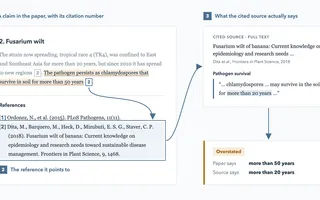
Evidence Lab v1.6.6 is a security and production release. Document changes and reprocessing now need an administrator, the key built into the web interface no longer opens MCP, A2A or a sign-in-required deployment, connecting an MCP client asks for consent, AI requests may use only the models and token budgets config.json allows, and text visitors submit can no longer run in the admin screens or exports. Brief gains a version history: a section's change can be reviewed and kept or rejected, and both sections and the whole brief can be compared with and restored to earlier versions. A Fact Checker shows a citation check's verdicts in the brief itself. Two new kinds of model provider arrive, any OpenAI-compatible embeddings endpoint and any Cohere-compatible reranker, and Amazon Rerank 1.0 becomes the AWS Bedrock combo's reranker. The AWS template gets what a production site needs: optional CloudFront and AWS WAF, weekly AWS Backup backups, moving data in and out through a transfer bucket, PostgreSQL 17, and fixes that keep the search index and the database version across deploys. Requests no longer fall back to the uneg data source, and the PDF heading add-in is held at the version existing libraries were parsed with. Releases are now tags on main.
Evidence Lab v1.6.5 is a packaging release. The API, MCP server and document pipeline are now published as one ready-built image for linux/amd64 and linux/arm64, on Docker Hub as astrobagel/evidencelab and mirrored on GitHub as ghcr.io/dividor/evidencelab, so a new install no longer builds the Python image itself. A new compose file runs Evidence Lab from that image and builds only the small web interface locally, and the demo script now starts it in one command. The shipped image is also 2 GB smaller, because the browsers used only by the integration tests now live in a separate test image. Database migrations also run again from a host checkout, which fixes the Demo E2E workflow. It also fixes two ways a search could run the local Jina reranker without a limit, which crashed the evidencelab.ai API by running it out of memory on 2 November, and moves the default reranker to Cohere. Visitors who are not signed in can now rate content, with one rating per item per browser. The web interface can now run behind a cloud load balancer, and tested example deployments arrive for three clouds, each with Terraform, scripts and exact steps: AWS (using Amazon Bedrock, which is new as a model provider), Azure Container Apps and Google Cloud Run. The Google Vertex models move to gemini-3.8-flash, because Google retired the Gemini 2.x models, and the Huggingface models move to Kimi K2, because Hugging Face's providers stopped serving Qwen3 235B. Long Brief sections no longer fail with a 422 error.
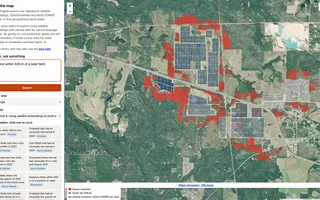
In this article, we explore searching satellite and climate data with natural-language questions like “find corn fields where July 2021 had at least 5 days above 35 °C”.